


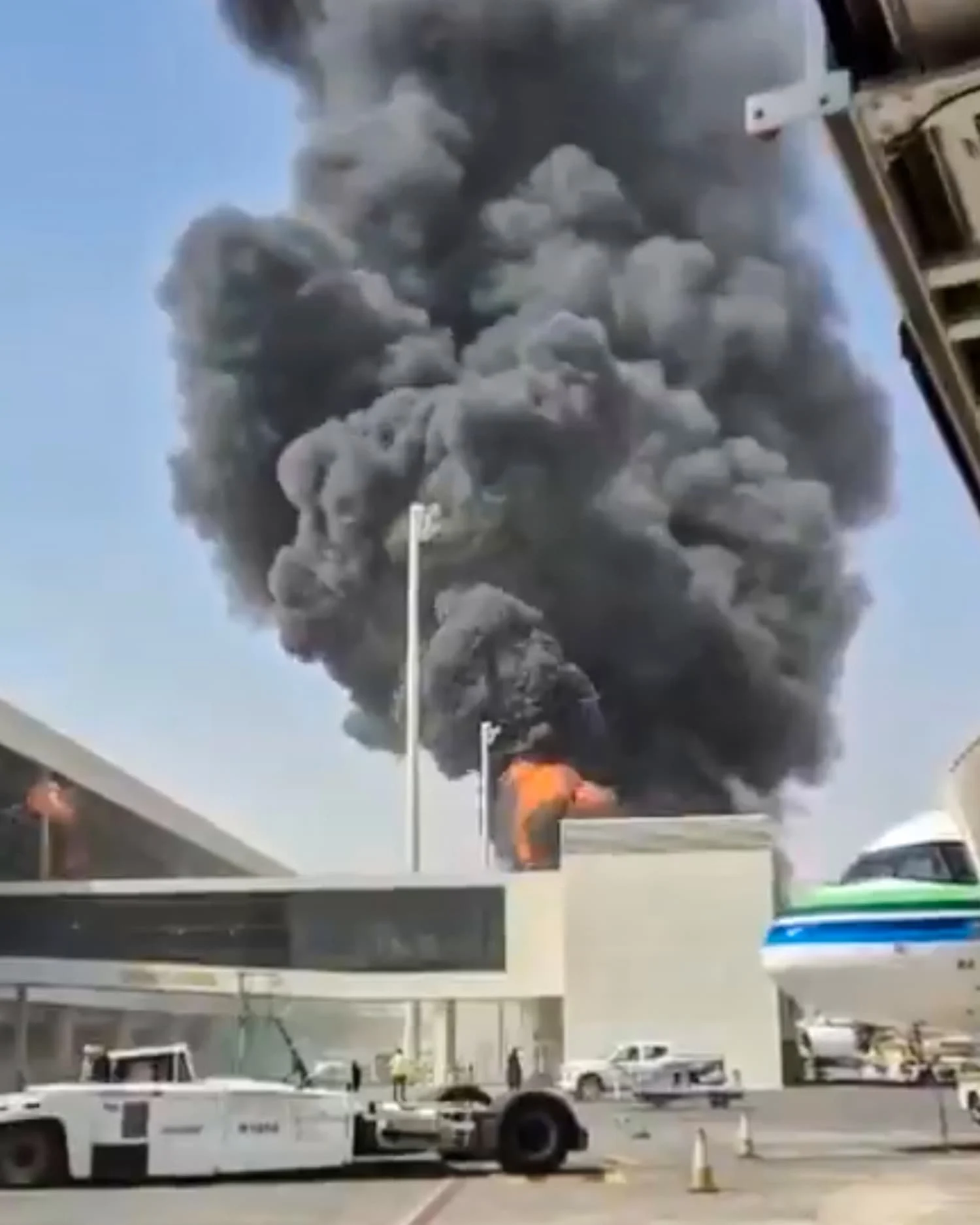
Saree vowed to sustain what he described as “escalating operations deep inside Saudi Arabia”, warning that airports across the kingdom could be attacked, except those in the holy cities of Mecca and Medina.
The Houthis have linked their attacks to Saudi Arabia’s support for government forces in Yemen’s civil war and an alleged Saudi air strike on Sanaa International Airport, the capital’s main airport.
On Sunday, Major General Turki al-Maliki, spokesman for the Saudi-led military coalition, said air defence systems had intercepted a missile near Riyadh’s airport. He added that officials were responding to a fire caused by an “unknown projectile” that struck Passenger Hall No. 4.
US President Donald Trump said Washington would “make a decision” on whether to launch strikes against the Houthis and would “move very quickly” on the matter. UK Defence Secretary Wes Streeting, meanwhile, indicated that Britain could “potentially” provide additional assistance to Saudi Arabia.
Saturday’s attack was described as the deadliest single assault on a Gulf Arab country since the war involving Israel, the United States and Iran began in February. The Saudi-led coalition condemned the incident as a “war crime” and vowed retaliation.
According to Saudi Arabia’s civil aviation authority, the dead included four Saudi nationals, two Bangladeshi citizens and one national each from the United States, Jordan, Palestine, Syria, Sudan and Egypt.
The Indian embassy in Saudi Arabia announced on Sunday that an Indian man had died from injuries sustained in Saturday’s attack.
US Secretary of State Marco Rubio condemned the strikes and confirmed that an American citizen was among those killed. Britain’s Foreign Secretary, Ed Miliband, also expressed outrage, saying he was “appalled”.
The UK Foreign Office has advised against all travel to parts of Saudi Arabia, including locations within 10 kilometres (6.2 miles) of the border with Yemen. Other Western diplomatic missions have also issued travel warnings to their citizens in the region.
Meanwhile, Houthi-run Al Masirah television reported that “the Saudi enemy” had carried out an air strike on Sanaa International Airport. Saudi authorities have not confirmed the alleged attack, and the BBC said it had been unable to independently verify the claim.
Abdullah Al-Alimi Bawazir, vice-president of Yemen’s internationally recognised government, called on regional and international partners to take “decisive actions” in response to the escalating violence.
Riyadh’s airport was also hit on Thursday, killing three Saudi nationals. The Houthis claimed responsibility for that attack, saying they had deployed cruise missiles against the facility.
Two other deadly attacks targeted Saudi airports in Abha and Riyadh in the two days preceding Thursday’s incident.
The renewed violence follows the collapse in July of a temporary ceasefire between the Houthis and Saudi-led forces that had been brokered in 2022.
Tensions intensified after the Houthis seized strategically important sections of Yemen’s Red Sea coastline in a rapid offensive, prompting Saudi air strikes. Yemeni pro-government forces subsequently announced that they had retaken the areas.
