


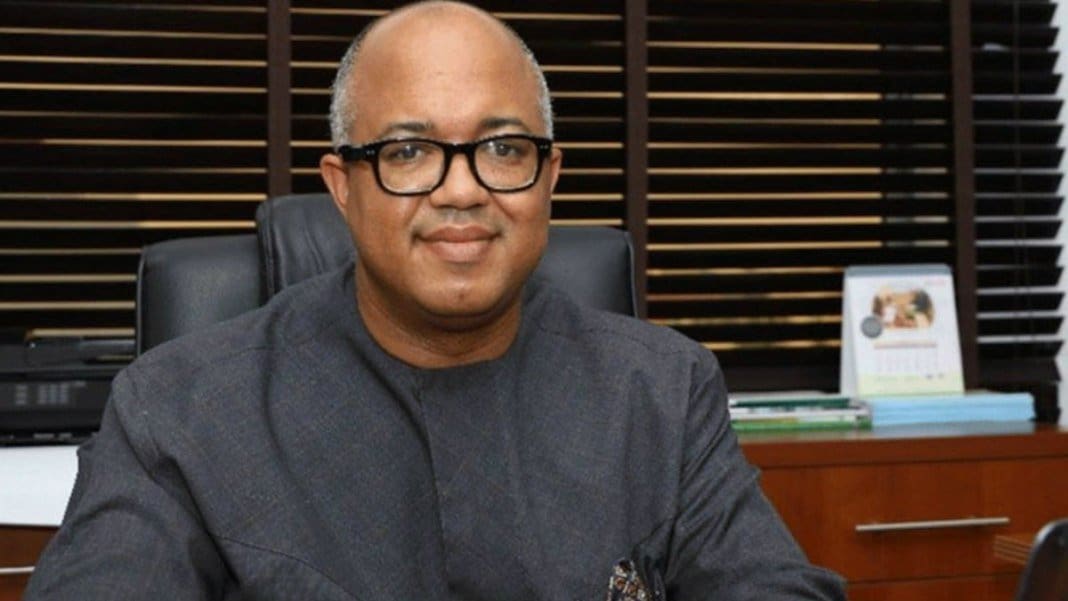
A former Director-General of the Nigeria Centre for Disease Control, NCDC, and current Assistant Director-General of the World Health Organisation, WHO, Chikwe Ihekweazu, has urged Nigerians, particularly students, not to lose hope in the country despite its challenges.
Ihekweazu made the call in Abuja on Saturday during the matriculation ceremony of Miva Open University, stating that Nigeria’s current situation reflected the choices made by political leaders and their priorities, urging students to acquire education not only for personal success but also to contribute to national development.
“Whatever you do, please do not lose hope in our country. The future we want will not be built by resources alone. It will be built by educated, engaged, and courageous citizens,” he said.
“Whether to build roads or to invest in education, whether to travel in convoys of 50 cars or to fix our universities, these are not benign choices,” he said.
Ihekweazu argued that education empowers citizens to question leadership decisions, demand accountability and develop alternatives capable of moving Nigeria in a different direction.
He urged the students not to see education merely as a pathway to personal comfort, but as an opportunity to develop the judgment, confidence and social consciousness needed to transform society.
“Please do not consume education only as a route to personal success. Use it to develop the judgment, the confidence, and the social consciousness to serve others and transform our society,” he said.
He added that Nigeria’s future would not be handed to its citizens but would have to be built through deliberate efforts and collective responsibility.
Drawing lessons from history, Ihekweazu recommended the book Why Nations Fail by Daron Acemoglu and James Robinson, explaining that societies often stagnate when political and economic power is concentrated in the hands of a few privileged individuals.
He noted that European societies had also experienced periods of aristocratic dominance, monopolies and restricted opportunities before gradually moving towards more inclusive systems.
According to him, wider access to education helped people acquire the knowledge and confidence to challenge existing structures and demand more inclusive societies.
“Your education must therefore be more than a passport to personal comfort. It should help you to understand the institutions around you, question what does not work, challenge injustice, create alternatives and widen the opportunity for others,” he said.
He reiterated that education should ultimately empower individuals to improve not only their own lives but also the lives of others.
“The purpose of education is not simply to change what you know; it is to expand what you’re capable of doing with your life and in the lives of others,” he said.
He urged the students to recognise their responsibility in shaping Nigeria’s future, insisting that the country belonged not only to political officeholders but also to younger generations whose decisions would influence its development.
“Nigeria does not belong only to presidents, governors, ministers, or those who hold power today. It also belongs to you,” he said.
He added that the future would be shaped by what the students learnt, what they built, what they refused to accept, whom they chose to serve and the opportunities they created for others.
The Chancellor of the institution, Sim Shagaya, added, “Our nation lost a lot of talents because in our analogue are made students to abandon their lives, family and work in order to study,” adding that studying from home have changed the narrative.
